
Artificial Intelligence · Conversational AI
Why the Last Three Turns Matter in Bot QA
A bot transcript can look successful at first glance. The customer asked a question, the bot responded, and the conversation ended. But in customer experience, the real story is often hiding in...
A bot transcript can look successful at first glance. The customer asked a question, the bot responded, and the conversation ended. But in customer experience, the real story is often hiding in the last three turns. That is where we usually see whether the bot actually solved the issue or simply moved the conversation forward without progress.
For CX leaders and Support Directors, this distinction matters. A transcript that appears resolved can still contain a missed exception, an unaddressed reason, or a customer who has repeated the same point in different words. When that happens, the bot has identified the topic, but not the fix. And in support operations, that gap is where quality starts to erode.
Resolution Is Not the Same as Progress
One of the most useful habits in transcript review is to stop focusing only on whether the bot answered. Instead, we should ask whether the conversation kept moving toward a real resolution. If the customer repeats the same point, the bot replies with policy language, and the final message becomes a handoff without a next step, the transcript is telling us something important.
That pattern often shows up in simple examples. A customer may start with “change my address,” then add “because I moved before the delivery date.” If we only tag the first intent, we may miss that the actual issue is a shipping exception. The surface request is clear, but the underlying need is different. This is why transcript quality review has to go beyond intent labels alone.
At ChatMetric, we think about bot QA as a process of finding the moment the bot stops making progress. That moment is usually more valuable than counting how often the bot gave an answer. A high answer rate can still hide weak containment if the bot keeps circling the same issue.
What to Look for in the Final Turns
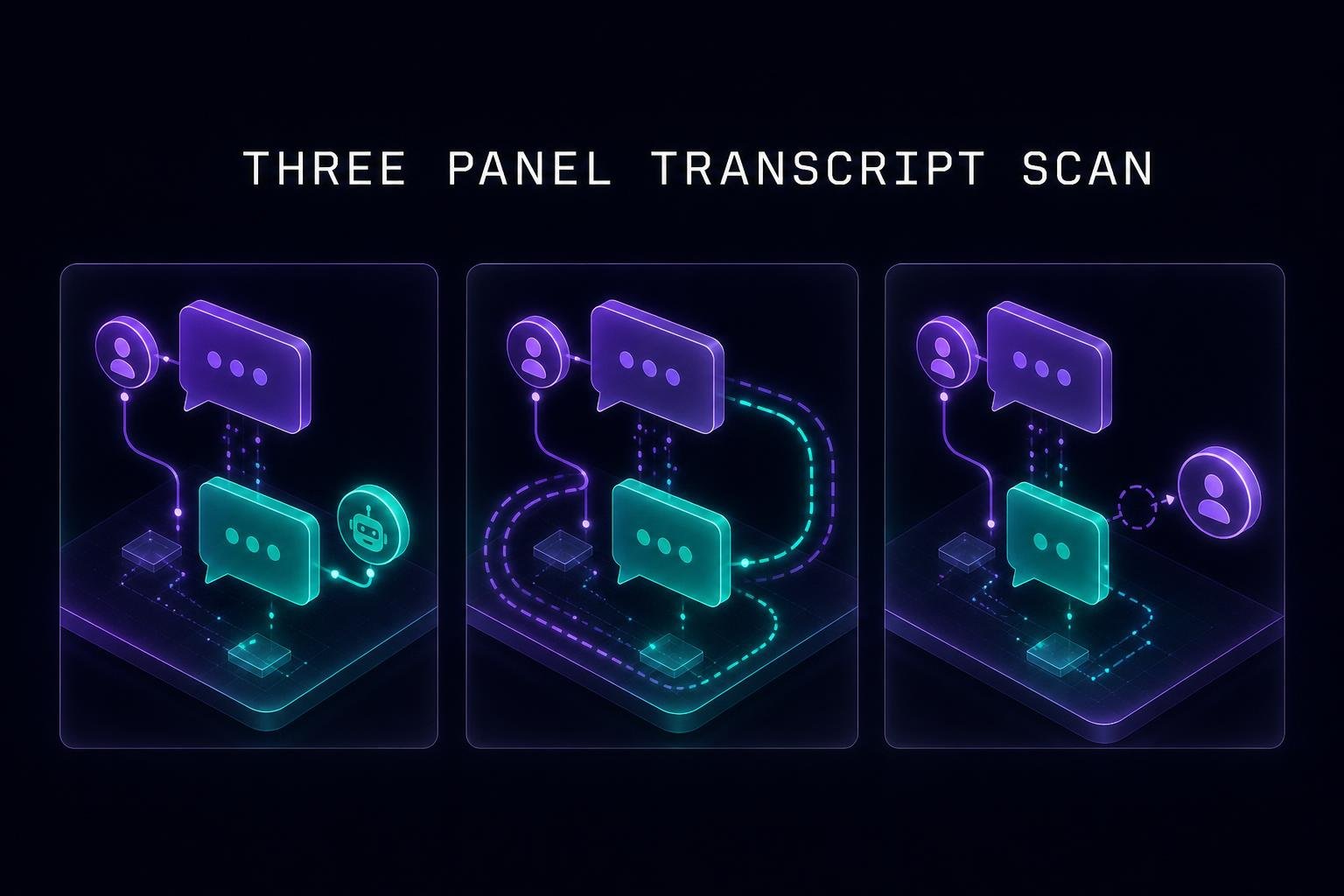
The last three turns of a transcript often reveal the truth faster than the first three. They show whether the bot is adapting, clarifying, or simply repeating itself. When we review conversations, a few signals stand out consistently:
Repeated phrases from the customer can show that the bot has not addressed the actual concern.
Abrupt topic changes may indicate that the bot is steering away from the problem instead of solving it.
Final messages with apologies, rewording, or restated questions often mean the bot found the question but not the fix.
These signals are practical because they are easy to spot and easy to coach against. They help support teams identify where the conversation lost momentum and where the bot needs better handling of exceptions, context, or follow-up logic.
A Practical Review Habit for CX Teams
Transcript review does not need to be complicated to be effective. A simple scan can uncover the most important failures quickly. We recommend starting with the end of the conversation and working backward when needed. That makes it easier to see whether the bot resolved the issue, redirected it, or stalled.
For CX leaders, this approach supports more consistent quality control. It helps teams move from broad reporting to targeted coaching. Instead of asking only whether the bot answered, the better question is whether the bot made meaningful progress toward resolution.
That shift matters because customers rarely judge support by the first response alone. They judge it by whether the conversation actually got them somewhere. If the final turns show repetition, confusion, or a handoff with no next step, the bot may have sounded confident while still failing the customer.
For teams scaling support, that is the level of detail that protects quality. It keeps transcript review grounded in real customer outcomes rather than surface-level completion. And it gives support leaders a cleaner way to see where automation is working, where it is stalling, and where the next improvement should happen.
To explore how we think about scalable support quality, visit ChatMetric.