
Artificial Intelligence · Conversational AI
Why Containment Alone Can Hide CX Problems
A contact center can celebrate a strong containment rate and still miss the real problem. In our work with CX teams, that is one of the most common blind spots in self-service reporting: the bot...
A contact center can celebrate a strong containment rate and still miss the real problem. In our work with CX teams, that is one of the most common blind spots in self-service reporting: the bot kept the conversation inside automation, but the customer still left without a fix.
That distinction matters. A refund request that receives policy text, or a password issue that gets an article, may count as a contained interaction. But if the customer still needs to come back, escalate, or repeat the issue, the experience was not resolved. The conversation ended. The need did not.
Containment Is Not the Same as Resolution
For CX leaders and Support Directors, the useful question is not only whether the bot handled the contact. It is whether the contact was actually solved. Containment tells us how often the bot kept the interaction in self-service. Resolution tells us whether the customer got the outcome they needed.
Those are related signals, but they are not interchangeable. A high containment rate can look healthy on a dashboard while masking a weak service experience. If the bot is excellent at redirecting customers into articles or policy language, but poor at closing the loop on the request, we have not reduced effort. We have simply moved it.
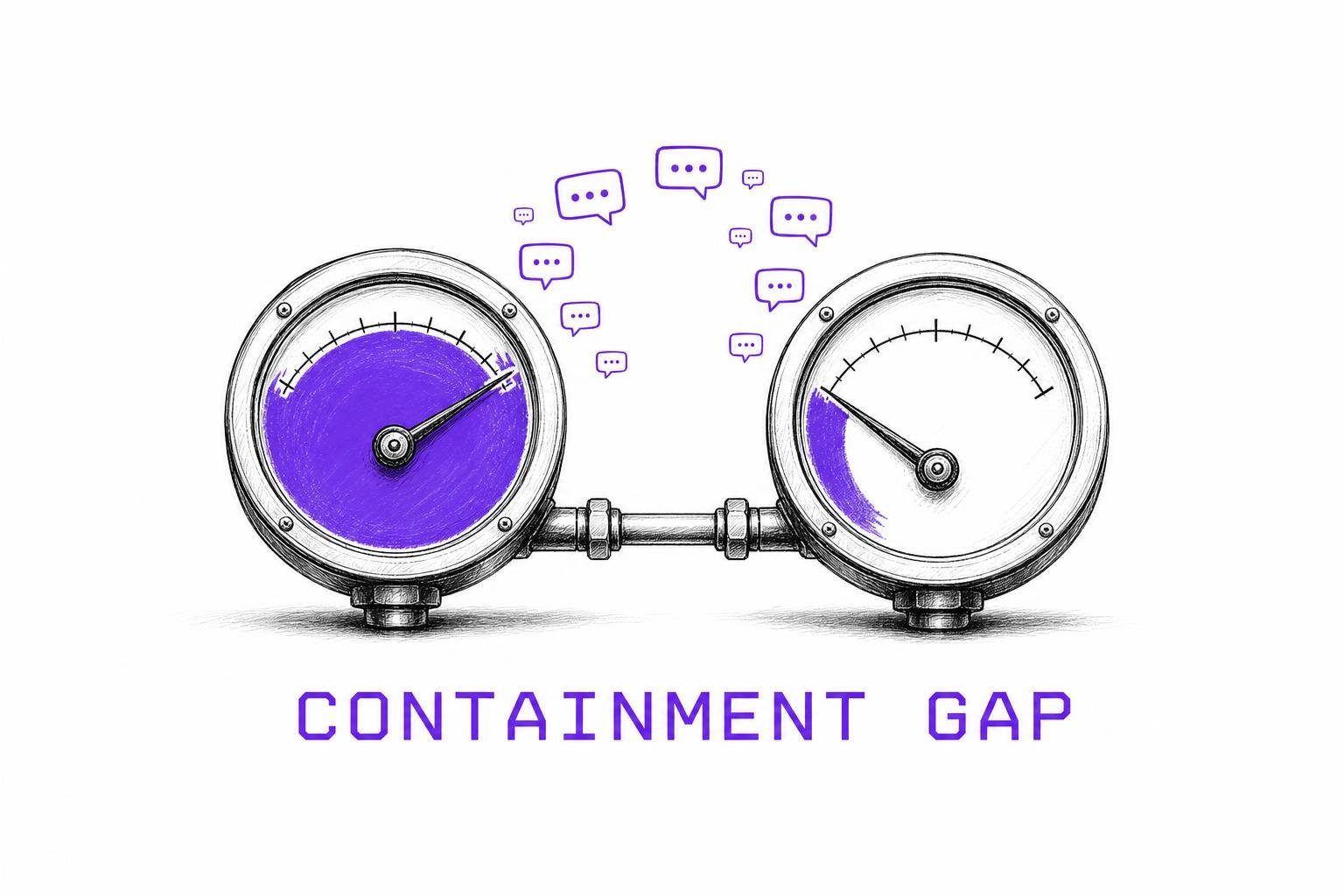
That is why we look at the gap between containment and resolution first. The gap shows where self-service is failing by intent. It tells us which topics the bot can hold, but not solve.
What the Gap Reveals About Self-Service Quality
When one intent shows high containment and low resolution, that is not efficiency. It is hidden rework waiting to surface as repeat contact or agent escalation. The customer may comply with the bot flow, but the underlying issue remains open.
For operational teams, that gap is valuable because it points to where self-service is absorbing volume without closing the issue. In other words, the bot is reducing immediate handle time, but not reducing demand. That is a crucial difference for any support organization trying to scale without losing quality.
We recommend treating the gap as a diagnostic signal rather than a vanity metric. It helps CX teams identify where the experience is breaking down, which intents need better design, and where automation may be creating more work later in the journey.
What CX Leaders Should Check First
Instead of asking whether containment is up, we ask whether resolution is keeping pace. If not, the next step is to inspect the intents behind the gap. Are customers getting the right answer? Are they being routed to the right path? Or are they being stalled inside self-service with no clear outcome?
This is where a more disciplined view of bot performance becomes useful. The strongest self-service programs do not just deflect contacts. They solve the right ones. They reduce repeat effort. They make it easier for customers to finish what they came to do.
That is why our approach at ChatMetric starts with the relationship between containment and resolution, not containment alone. When we examine both together, we can see where automation is working, where it is only containing, and where it is creating avoidable friction.
Scaling Self-Service Without Losing Quality
As contact centers scale, the temptation is to celebrate every contact that stays out of the queue. But for customer experience, scale only matters when it preserves or improves quality. A bot that contains volume but does not resolve the issue may protect staffing metrics in the short term while weakening trust over time.
The more useful view is simple: containment shows activity, resolution shows outcome, and the gap shows risk. CX teams that monitor all three can make better decisions about where to improve automation, where to adjust content, and where to route customers faster to the right support path.
If our goal is to scale without losing quality, we need to measure what customers actually experience, not just what the bot handled. For a deeper look at how we think about this operationally, visit our website.