Artificial Intelligence · Conversational AI
When a Bot Should Hand Off to a Human
For CX leaders, the handoff question is not really about whether a bot can keep talking. It is about whether the bot should keep talking. That distinction matters more than most support teams...
For CX leaders, the handoff question is not really about whether a bot can keep talking. It is about whether the bot should keep talking. That distinction matters more than most support teams realize, because the best automation is not the one that stretches the longest. It is the one that knows when the work has changed.
A bot can handle a simple, contained task well. A password reset is a clear example. The request is narrow, the path is predictable, and the customer expectation is straightforward. In that kind of interaction, automation can reduce effort without reducing quality. But the moment the same thread shifts into account access, policy interpretation, or a sensitive situation, the nature of the work changes. At that point, the bot is no longer managing a task. It is being asked to make a judgment call.
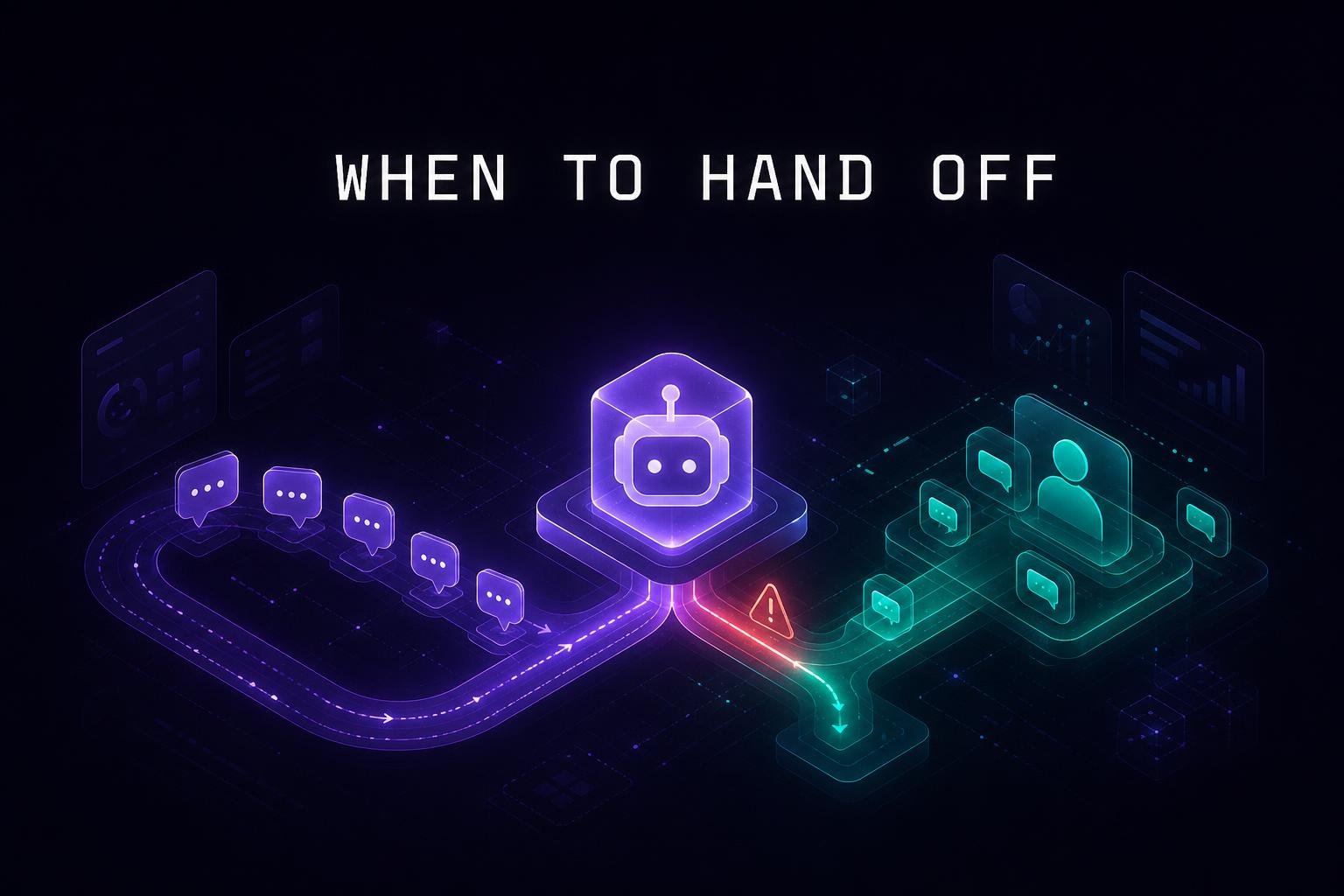
That is where many teams miss the real handoff signal. Too often, teams wait for repeated messages, longer threads, or signs of frustration before escalating. In practice, that means the handoff becomes a rescue instead of a design choice. By then, the customer has already been pushed too far, and the conversation has become harder than it needed to be.
The cleaner rule is simpler: route based on the type of work in the thread, not the number of turns. If the next response requires discretion, context, or a human decision, the bot should stop and hand off. That approach protects the customer experience and keeps the bot operating inside the boundaries where it can be most effective.
This is especially important for support organizations that want to scale without losing quality. Scale is not just a volume problem. It is a decision-making problem. The more conversations a team automates, the more important it becomes to define where automation ends and human support begins. Without that line, teams risk creating friction in the very moments when customers need clarity, empathy, or judgment.
At ChatMetric, we think about handoff design as a core part of the support experience, not an afterthought. The goal is not to replace human support. The goal is to make sure each conversation is handled by the right resource at the right moment. That is how teams protect quality while still gaining the efficiency automation is meant to deliver. For teams exploring this balance, our ChatMetric platform is built to help define those moments with more precision. More broadly, our approach to CX automation centers on routing by intent, sensitivity, and decision complexity rather than waiting for a conversation to go off track.
The practical question for every support leader is not whether the bot can continue. It is whether continuing serves the customer. If the answer is no, the handoff should happen there, not after the thread has already become a problem. That is the line worth drawing today.